You've heard it a hundred times. Eat your blueberries. Drink your green tea. Add acai to your smoothie bowl. These are the foods the wellness world has crowned as the ultimate antioxidant heroes - and for good reason. They are good for you.
But there's a superfood that quietly outperforms all of them, and most people walk right past it in the health food aisle.
Ceremonial cacao.
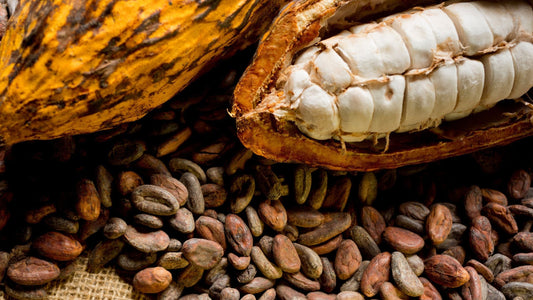
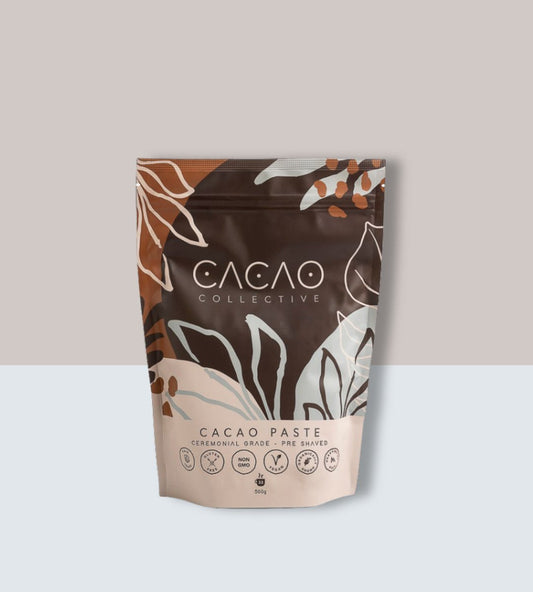
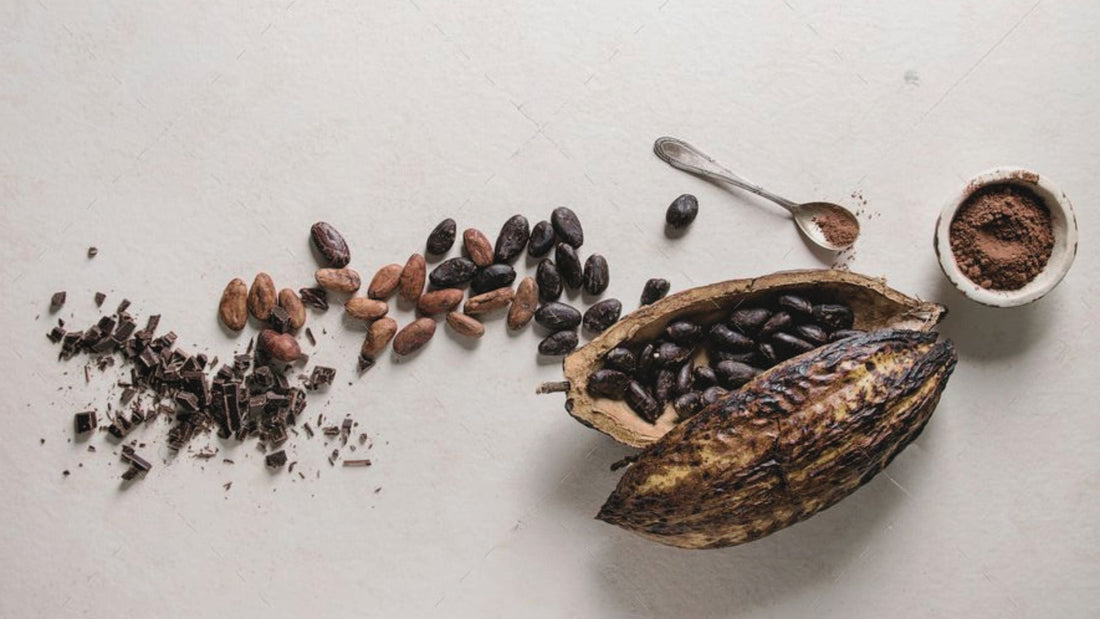
Not the cocoa powder in your pantry. Not a chocolate bar. Ceremonial grade cacao - the whole, minimally processed paste made from Criollo cacao beans - has one of the highest antioxidant concentrations of any food on the planet.
Here's the science, the comparison, and why it matters for how you feel every single day.
What Are Antioxidants - and Why Should You Care?
Before we get into the numbers, it's worth understanding what antioxidants actually do in the body, because "antioxidant-rich" has become so overused it's almost lost meaning.
Every day, your body produces and encounters free radicals - unstable molecules that damage cells by stealing electrons from healthy tissue. Stress, pollution, UV exposure, processed food, and even normal metabolic processes generate them constantly.
Left unchecked, free radical damage contributes to:
- Premature ageing (skin, cells, and organs)
- Chronic inflammation
- Cognitive decline and brain fog
- Cardiovascular disease
- Fatigue and low energy
- Hormonal disruption
Antioxidants are the molecules that neutralise free radicals - they donate an electron to stabilise them before damage occurs. The more antioxidant-rich your diet, the better equipped your body is to protect itself.
So when we say ceremonial cacao is high in antioxidants, we're not talking about a nice-to-have marketing claim. We're talking about measurable, physiological protection.
How We Measure Antioxidant Power: The ORAC Score
Scientists measure antioxidant activity using a standardised scale called ORAC - Oxygen Radical Absorbance Capacity. It quantifies how effectively a substance can neutralise free radicals in a controlled laboratory test.
The higher the ORAC score, the more antioxidant firepower the food delivers per gram.
Here's how the most popular "antioxidant superfoods" compare per 100g:
|
|
ORAC Score (per 100g) |
|
🍵 Green tea (brewed) |
~1,253 |
|
🫐 Blueberries (fresh) |
~4,669 |
|
🫐 Acai (fresh pulp) |
~15,405 |
|
🍫 Raw ceremonial cacao |
~95,500 |
The numbers speak for themselves.
Ceremonial cacao delivers:
- ~20x more antioxidant activity than fresh blueberries
- ~76x more than a cup of green tea
- ~6x more than fresh acai pulp
This isn't a marginal difference. It's a completely different category.
But What About Acai Powder?
This is the question that comes up most, and it's a fair one. Freeze-dried acai powder does score higher per 100g in some studies - sometimes exceeding 100,000 ORAC units.
But here's what that number doesn't tell you: how much acai powder are you actually consuming in a sitting?
A typical acai smoothie bowl uses frozen or thawed acai pulp - not powder - and by the time it's blended with banana, almond milk, and toppings, the actual acai content per serve is minimal. The effective antioxidant delivery in your bowl is a fraction of what the per-100g powder figure suggests.
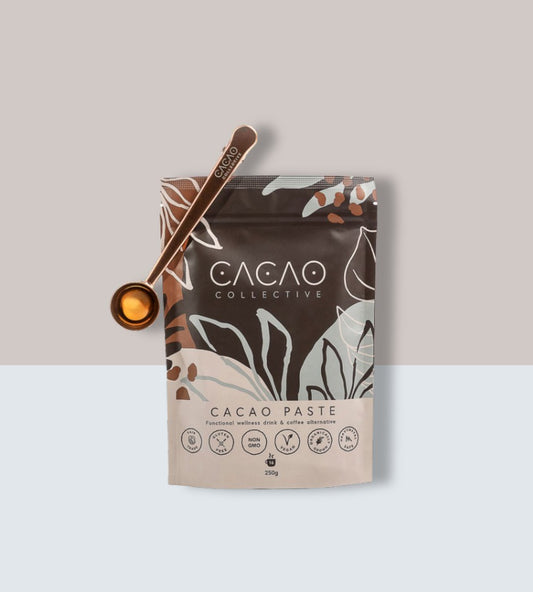
With ceremonial cacao, you're using the whole, minimally processed paste - nothing stripped, nothing diluted. A standard cacao contains approximately 20g of cacao paste per serve. What the label says is what your body actually receives.
Why Processing Destroys Most of Cacao's Benefits
Here's the piece of the puzzle most chocolate marketing glosses over entirely: the antioxidant content of cacao is extraordinarily sensitive to processing.
Dutch-process cocoa powder: The alkalisation process used to make conventional cocoa powder smooth and mild-tasting destroys up to 90% of the natural flavanols. What's left is a much more palatable, much less medicinal product. Great for baking. Not so great for your cells.
Commercial chocolate bars: By the time raw cacao has been roasted, processed, combined with sugar, milk solids, and emulsifiers, and heat-treated for shelf stability - you're consuming a fundamentally different food. The antioxidant activity is a shadow of what the raw cacao contained.
Ceremonial grade cacao: Minimally processed to preserve the full spectrum of naturally occurring compounds. No alkalisation. No added ingredients. The flavanols, theobromine, magnesium, phenylethylamine, and antioxidant polyphenols remain intact.
This is why the grade and processing method of cacao matters as much as the ORAC number.
What Makes Our Cacao Different
- 100% organic Criollo from Peru - Criollo is one of the rarest and most antioxidant-rich cacao varieties in the world, representing less than 5% of global production
- Single ingredient - pure cacao paste, nothing added, nothing removed
- Minimally processed - cold-pressed and low-heat to preserve the full flavanol and nutrient profile
- Pre-shaved - so you can dissolve it easily without grating, grinding, or fuss
- Ethically sourced - from farms that prioritise soil health, biodiversity, and fair conditions for growers
When you make a cacao with our ceremonial cacao, you're receiving the full benefit of one of the planet's most antioxidant-dense foods in its most intact form.
The Bottom Line
Blueberries are great. Green tea is great. Acai, when you're getting the real thing in meaningful amounts, is great.
But if you're looking for the most antioxidant-dense whole food you can add to your daily routine - one that also supports your mood, your focus, your nervous system, and your cardiovascular health - ceremonial cacao is in a category of its own.
The ORAC data is there. The clinical research on cacao's flavanols is growing. And for 25,000+ people who have made it part of their mornings, the real-world results speak louder than any study.
Ready to experience the difference?